
Skip to content
Clear communicationFree inspections
Call now (306) 555-0188
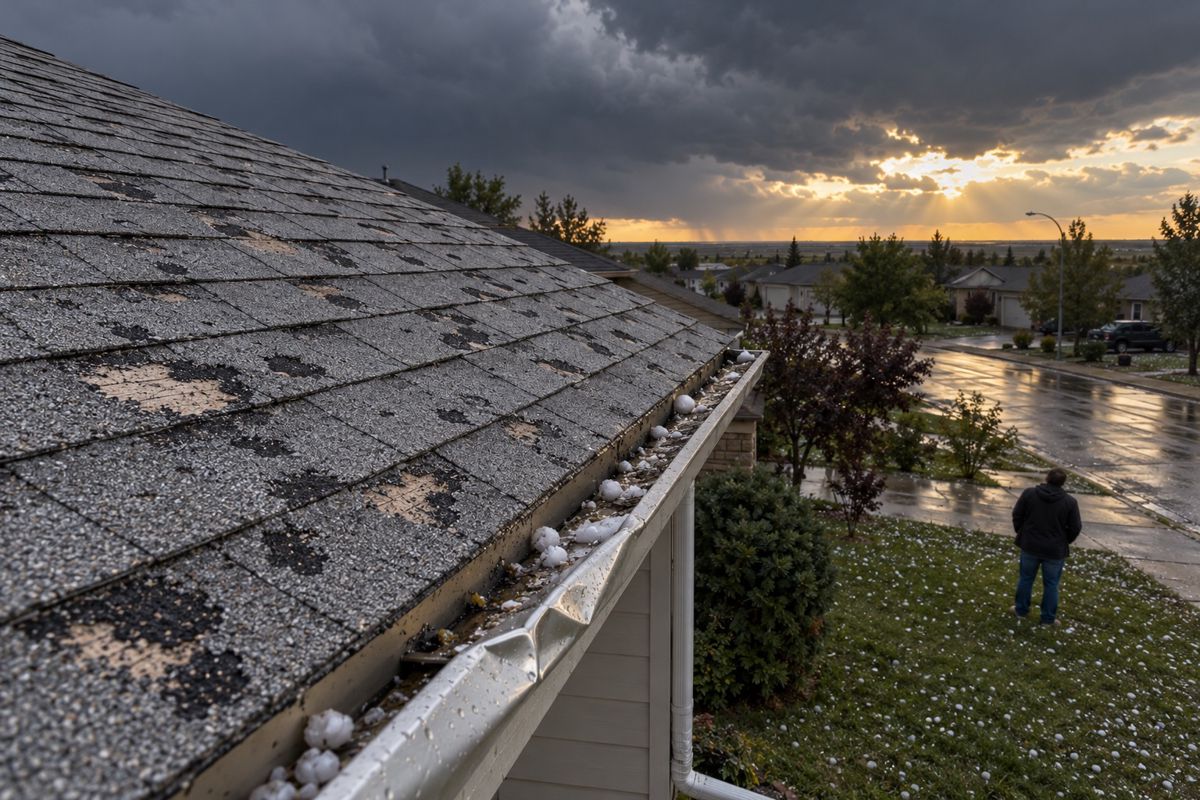
Hail-bruised shingles and a dented eavestrough under a clearing storm sky

Storm and hail damage in Regina

Storm damage roof repair in Regina after hail and wind

Prairie storms can damage a roof in minutes. We help you stop further harm and understand what the roof needs.

  • Written description of the damage with photos
  • Help protecting the roof from further water
  • Plain advice that supports your insurance claim

Step 1 of 3

What do you need?

What counts as storm and hail damage to a roof?

Regina sits in hail country. Summer thunderstorms can bring hailstones, heavy rain and strong gusts, sometimes all in the same twenty minutes. The damage is not always obvious from the ground.

Signs to look for

  • Dark, round spots or bruises on shingles where granules have been knocked off.
  • Dented metal vents, flashing, eavestroughs and downspouts.
  • Cracked or split shingles.
  • Shingles lifted, creased or missing after wind.
  • Granules piled at the base of downspouts.
  • Damage to siding, windows and fences, which suggests the roof took a hit too.

Hail bruising may not leak straight away. It shortens the life of the shingle and can lead to leaks later. Fallen branches or debris can also puncture a roof, so look for impact marks after any big storm.

What should you do right after a storm?

Stay off the roof. Wet shingles and loose debris make it dangerous, and you can cause more damage by walking on bruised shingles.

  1. Check inside for drips, stains or wet insulation, and move belongings away.
  2. Take clear photos of the damage from the ground, including dented metal and any hailstones, with a coin or ruler for scale if you can.
  3. Write down the date and time of the storm.
  4. Contact your home insurer to open a claim.
  5. Arrange for a roofer to inspect the roof and describe the damage in writing.
  6. If water is getting in, ask about protecting the roof temporarily, for example with a tarp, until a proper repair can be done.

Keep all receipts for temporary protection, since your insurer may ask for them. A roof inspection gives you a written record you can share with your insurer.

How do hail damage claims usually work?

Every policy is different, so read yours and speak to your insurer. In general, you report the damage, an adjuster looks at the roof, and the insurer decides what is covered and how it is paid. Deductibles and the age of the roof can affect the outcome, and some policies treat wear differently from sudden storm damage.

A roofer is not your insurer. We cannot promise a claim will be approved or tell you what your policy covers. What we can do is inspect the roof, describe the damage, and give you a written quote for repairs or replacement that you can show your adjuster.

Be careful after big storms. Out-of-town crews sometimes go door to door, ask for a deposit and then disappear. Get everything in writing, check the contractor is real and local, and do not sign over your claim without reading what it says.

Storm repairs range from a handful of shingles to a full roof, and the quote follows the damage.

  • How much of the roof was hit, and how badly.
  • Whether the shingles are bruised or actually cracked and torn.
  • Damage to flashing, vents, eavestroughs and other metal parts.
  • Wet or damaged decking and insulation underneath.
  • The age and condition of the rest of the roof.
  • Whether the repair can be matched to the existing shingles.

When damage covers most slopes, replacement is often more sensible than patching, and our roof replacement page explains that work. For smaller jobs, see roof repair. Impact-resistant shingles are one option to discuss, and some insurers may offer a benefit for them, so ask yours.

How long does it take, and when should you call?

After a big hailstorm many roofers get busy at once, so timing can vary. Ask for an honest schedule. Temporary protection can often be done more quickly than the final repair, and the full job depends on materials, weather and the size of the damage.

Call as soon as you can after a storm, even when you see no leaks. Early documentation helps your claim, and small problems are easier to deal with before winter. Call urgently when water is coming in, shingles are missing, or a branch has hit the roof.

Meanwhile, keep your photos, notes and receipts together. To start, go to our Regina roofing home page or use the quote form with your address and a short description of the damage.

What you can expect

  1. Clear communication

  2. Free inspections

  3. Written estimates

  4. Local crew

Questions about roofing in Regina

How can I tell if my roof has hail damage?

Look from the ground for dented vents, flashing and eavestroughs, and for granules at the base of the downspouts. On the shingles, hail shows as dark round bruises with missing granules. Many signs are hard to see without climbing up, so ask a roofer to inspect it rather than going onto the roof yourself.

Should I call my insurer or a roofer first?

Contact your insurer to open a claim, and arrange a roofer to inspect the roof as well. The order matters less than acting promptly. Take photos before anything is moved or repaired, keep receipts for temporary protection, and do not sign any paperwork you have not read carefully.

Does hail damage always cause leaks?

No. Bruised shingles may hold water out for months, so the roof can look fine from the inside. The damage still shortens the roof's life and can fail later, often in a thaw. That is why a written inspection after a bad storm is worth having, even without any leak.

Can a damaged roof be repaired temporarily?

Often yes. A temporary cover such as a tarp, or a quick patch, can slow water while the claim is processed and materials are arranged. It is a short-term measure, not a final repair. Keep receipts, take photos before and after, and make sure the final repair is planned.

How do I avoid storm-chasing roofers?

Be wary of anyone who arrives uninvited, pushes you to sign the same day or asks for a large deposit in cash. Ask for a local address, proof of insurance and Workers' Compensation coverage, and written references. Take your time. A reliable roofer will not mind you checking.

Will replacing the roof raise my insurance?

That depends on your insurer and policy, so ask them directly. Some insurers look at the age and material of the roof when setting premiums, and a newer or impact-resistant roof may be viewed more favourably. We cannot say what your insurer will do, but we can provide details about the work done.

Step 1 of 3

What do you need?

Ready when you are

Call now or request a quote online.

(306) 555-0188

How it works

1

Call or request a quote

Tell us what is happening with the roof.

2

Free inspection

A roofer checks the roof and gives a written price.

3

Work done right

Clean crew, nail sweep, warranty in writing.